
























































































































































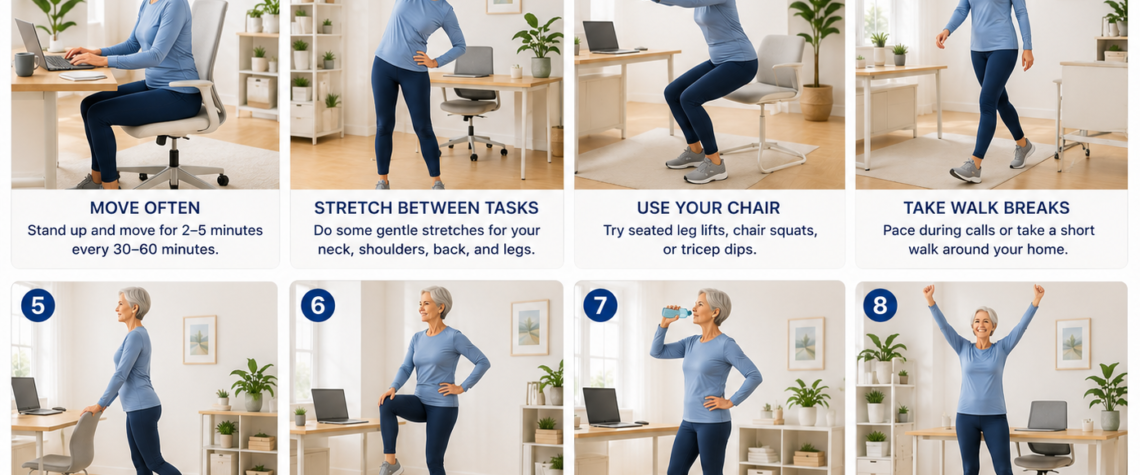
15 Easy Ways to Stay Active While Working From Home Without Disrupting Your Workday
Updated On: September 2026
About Us
Author Bio
Editorial Policy
Contact Us
Quick Answer
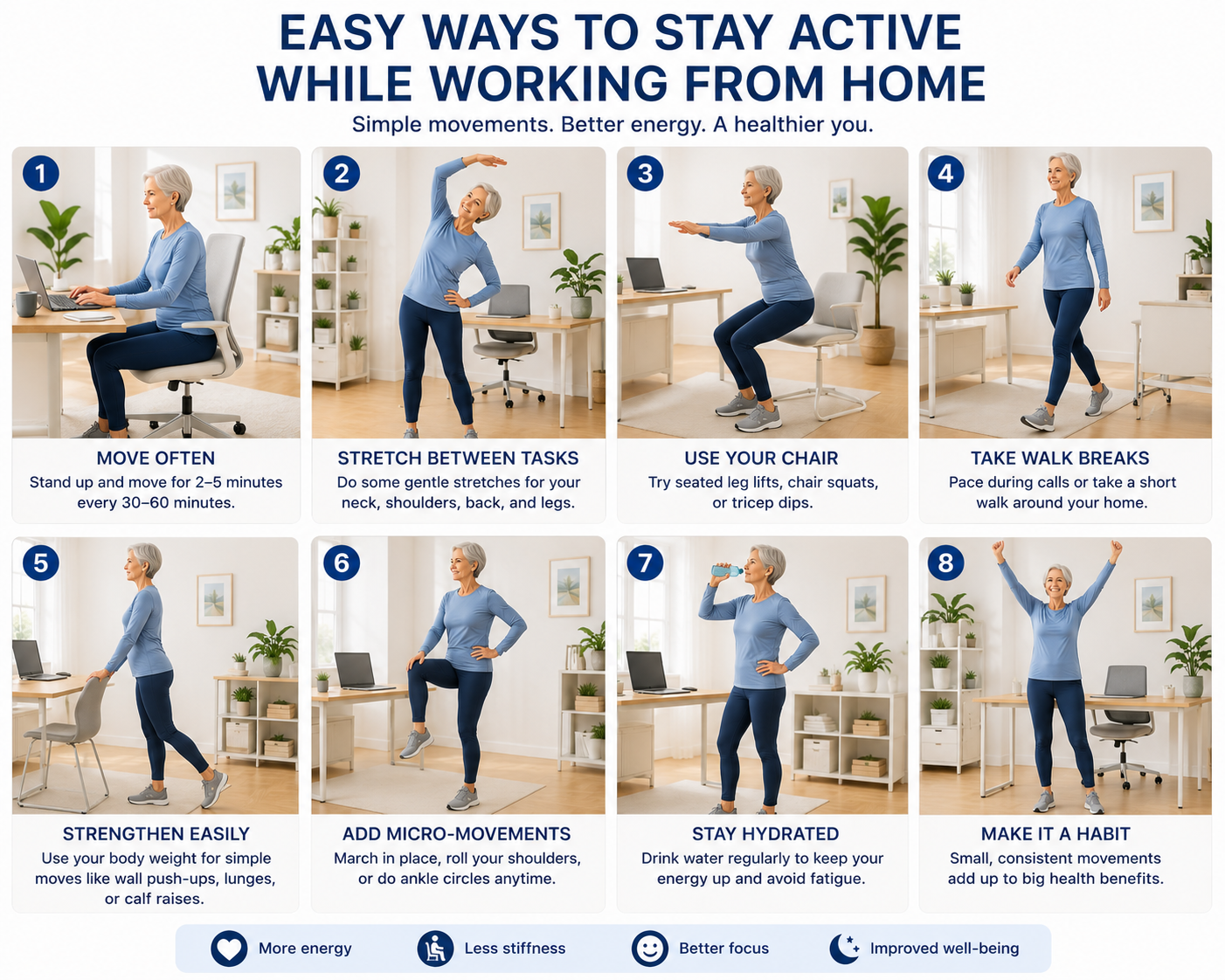
The easiest way to stay active while working from home is to build movement into tasks you already perform.
You can walk during suitable audio-only calls, stand during certain phone conversations, take short walking breaks between work blocks, stretch during natural pauses, and eat lunch away from your desk.
This matters because working from home can remove some of the movement that naturally occurs in an office environment.
A 2026 systematic review and meta-analysis examined 38 studies involving 282,264 workers. Compared with onsite work, working from home was associated with an average increase of about 31 minutes of sedentary time during work hours and approximately 2,564 fewer daily steps. The researchers also noted substantial variation between studies, and 31 of the 38 studies were conducted during the COVID-19 pandemic, which may have influenced the findings. PubMed: Working From Home, Sedentary Behaviour and Physical Activity.
That does not mean working from home is automatically unhealthy.
It means that when commuting, walking to meetings, and trips around an office disappear, you may need to create new movement opportunities.
The World Health Organization recommends limiting sedentary time and replacing some of it with physical activity of any intensity, including light-intensity activity. WHO: Guidelines on Physical Activity and Sedentary Behaviour.
Introduction
Working from home can provide flexibility.
You can avoid the commute, prepare food in your own kitchen, and organize parts of your day around personal responsibilities.
However, there is a hidden problem.
Many of the small movements that happen naturally during an office day may disappear.
Your daily movement can decrease when you no longer walk from the parking area, visit a colleague’s desk, or walk to a meeting room.
You can sometimes spend the entire morning moving only between your bed, kitchen, and desk.
I noticed this myself during long writing sessions. The problem was not necessarily that I skipped exercise. Some days, the bigger issue was how little I moved between exercise sessions.
That changed the way I thought about staying active.
Instead of treating movement as something that happens only during a workout, I began looking for opportunities to move throughout the workday.
This approach is consistent with WHO guidance, which emphasizes that physical activity can come from work, transportation, household tasks, recreation, and other parts of daily life. WHO: Physical Activity Guidelines.
You do not need to turn your home office into a gym.
You need to make movement a more natural part of your day.
Key Takeaways
- Working from home can remove some everyday opportunities for movement.
- Short movement breaks can interrupt prolonged sitting.
- Walking and other light activities can contribute to your overall physical activity.
- You do not need expensive equipment to become more active.
- Connecting movement to existing habits can make it easier to maintain.
- Formal exercise and everyday movement serve different purposes and can complement each other.
- The best routine is one that fits your health, schedule, and work responsibilities.
- Consistency is more realistic than trying to compensate for an inactive day with one exhausting workout.
What Happens When Working From Home Reduces Daily Movement?
Sitting itself is not automatically harmful.
The concern is spending large amounts of waking time in sedentary behavior with insufficient physical activity.
WHO defines sedentary behavior as waking behavior involving low energy expenditure, such as sitting, reclining, or lying down. Higher amounts of sedentary behavior in adults are associated with several adverse health outcomes, including higher risks of cardiovascular disease and some cancers. WHO: Physical Activity Fact Sheet.
Working from home can make prolonged sitting easier.
You may sit down at 9 a.m. and remain at the computer until lunch.
After lunch, you return to the same chair.
Another meeting follows.
After that, you check email and move on to the next deadline.
Several hours can pass without a meaningful change in your activity level.
The recent systematic review of remote work found that sedentary time tended to increase and daily steps tended to decrease when people worked from home compared with onsite work. However, the researchers emphasized that the studies differed considerably in methods and that most were conducted during the pandemic. PubMed: Working From Home and Physical Activity.
So the evidence should not be interpreted as saying every remote worker becomes inactive.
Instead, it highlights a practical issue:
When movement is no longer built into your environment, you may need to build it into your routine.
What Does Research Say About Staying Active While Working From Home?
The research on remote work and physical behavior is still developing.
A systematic review examining working from home and physical behavior found evidence suggesting a negative relationship between working from home and physical activity, although the researchers rated the overall evidence quality as low and called for stronger longitudinal studies. PubMed: Working From Home and Physical Behavior.
That limitation is important.
It would be inaccurate to say:
“Working from home causes poor health.”
A more accurate statement is that remote work can alter opportunities for physical activity and sedentary behavior.
Your total health picture also depends on sleep, diet, exercise, stress, work conditions, and many other factors.
For adults aged 18–64, WHO recommends 150–300 minutes of moderate-intensity aerobic activity per week, or 75–150 minutes of vigorous activity, or an equivalent combination. WHO also recommends muscle-strengthening activity involving the major muscle groups on at least two days each week. WHO: Guidelines on Physical Activity and Sedentary Behaviour.
The CDC gives similar guidance, recommending at least 150 minutes of moderate-intensity physical activity per week and muscle-strengthening activity on at least two days. The CDC also emphasizes that adults can spread activity throughout the week and break it into smaller periods. CDC: Adult Activity Guidelines.
That makes your workday an opportunity rather than an obstacle.
15 Easy Ways to Stay Active While Working from Home
1. Walk During Suitable Audio-Only Meetings
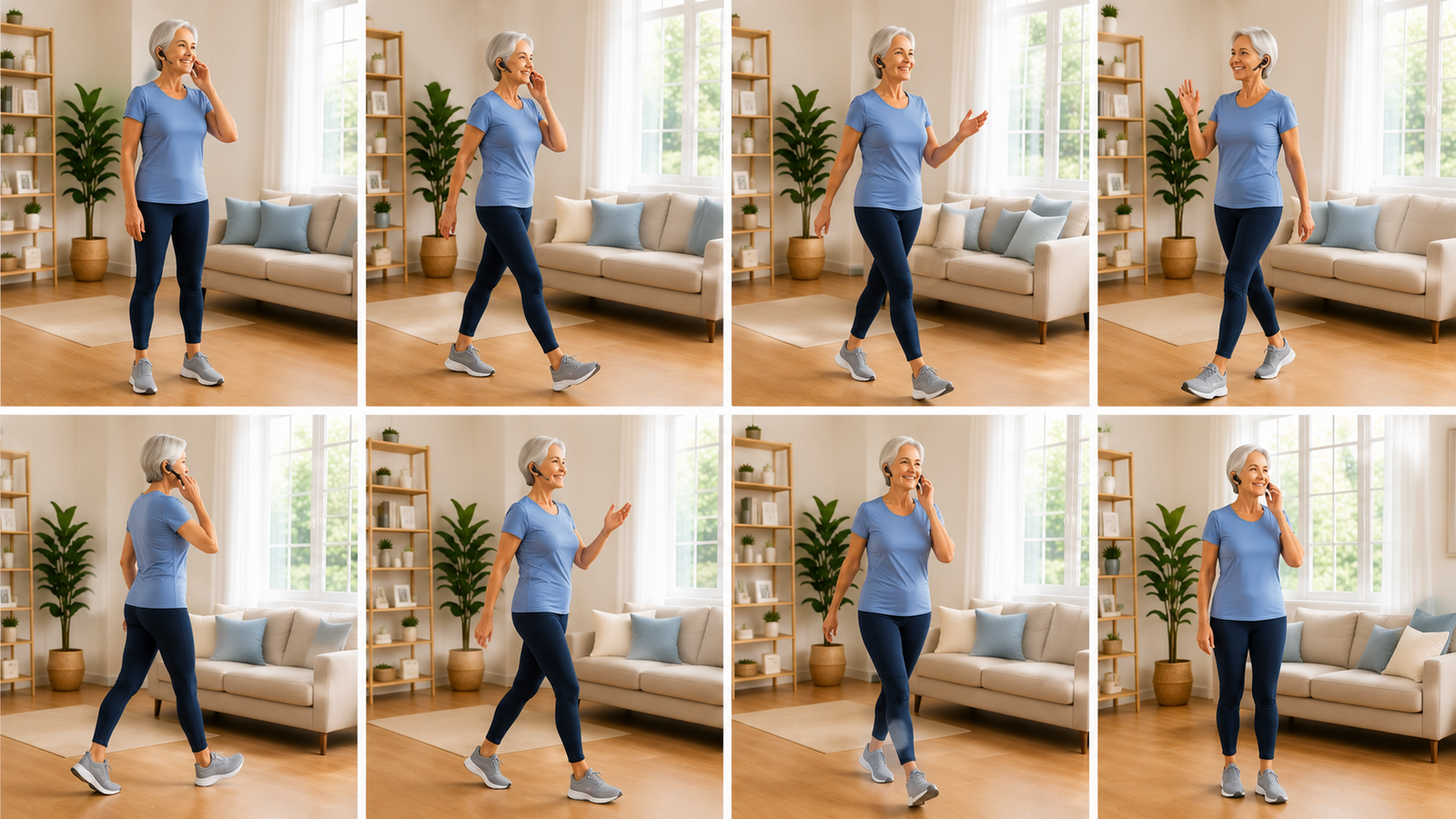
If a meeting does not require you to look at the screen, consider walking slowly around your home.
This may work well for routine phone calls or conversations where active screen use is unnecessary.
You do not need to walk quickly.
A comfortable walk is enough to change a period of sitting into movement.
How to start: Choose one suitable audio-only meeting and walk for part of it.
People-first tip: Do not walk during meetings that require screen sharing, detailed note-taking, or intense concentration.
2. Use Water Breaks as Movement Opportunities
Keep water available during the workday.
When you need a refill, use the opportunity to stand and walk briefly.
The goal is not to restrict your water intake or deliberately make hydration inconvenient.
Instead, you are connecting an existing daily activity with movement.
Try this: Keep your refill point away from your immediate desk area if practical.
That gives you another natural reason to stand.
3. Create an Email Mobility Habit
Email can create another long period of sitting.
Instead of moving immediately from one batch of messages to another, use certain transitions as movement cues.
You could perform:
- shoulder rolls
- gentle arm movements
- ankle movements
- a short walk
- comfortable mobility exercises
The goal is not to turn every email session into a workout.
It is simply to interrupt sitting.
4. Use a Doorway as a Movement Reminder
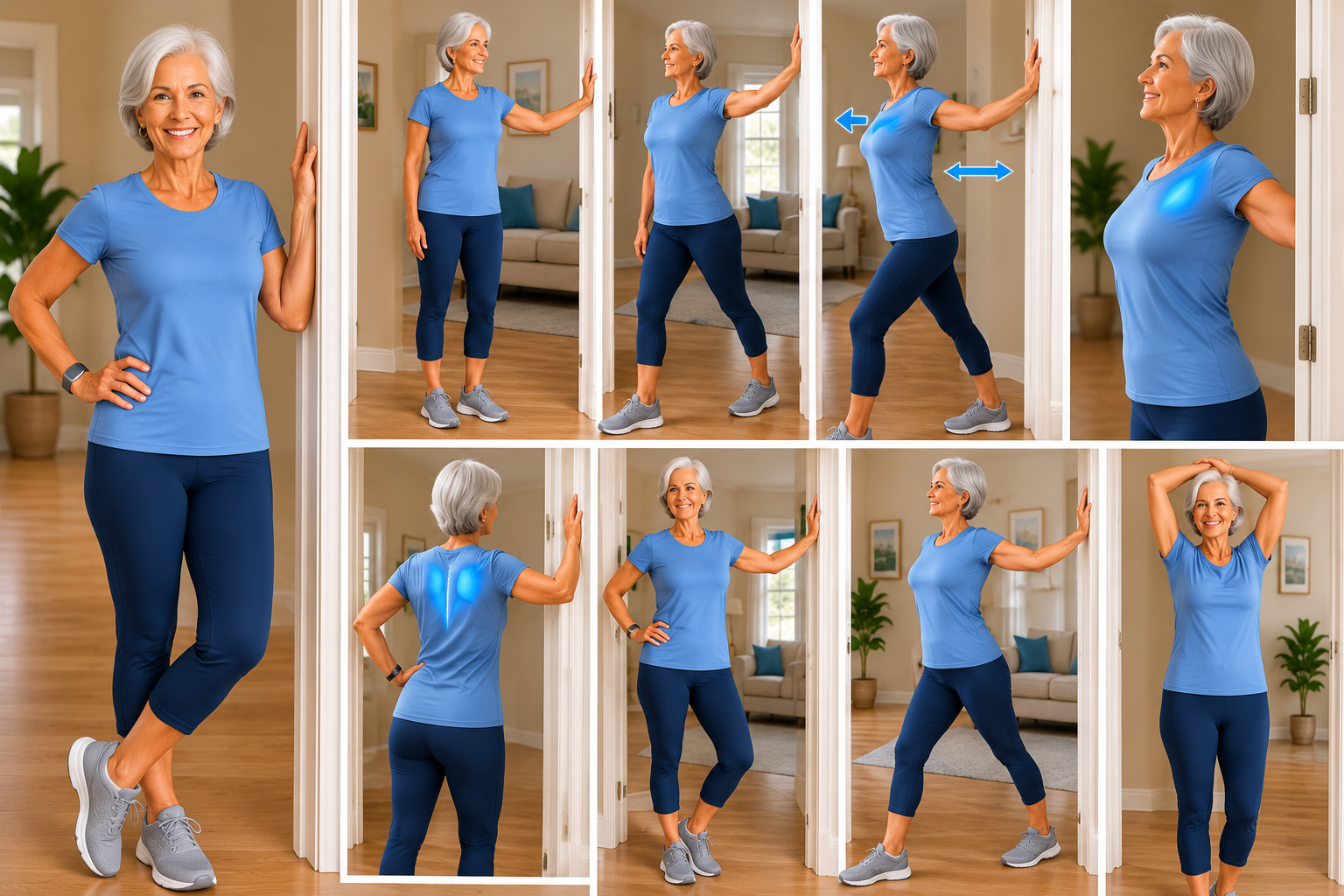
Choose a doorway that you pass frequently.
Each time you walk through it, use the opportunity to change position, walk a little farther, or perform a gentle shoulder movement.
This is a simple example of habit stacking.
You connect a new behavior to something that already happens automatically.
For people who dislike constant phone reminders, environmental cues can be easier to maintain.
5. Stand During Appropriate Phone Calls
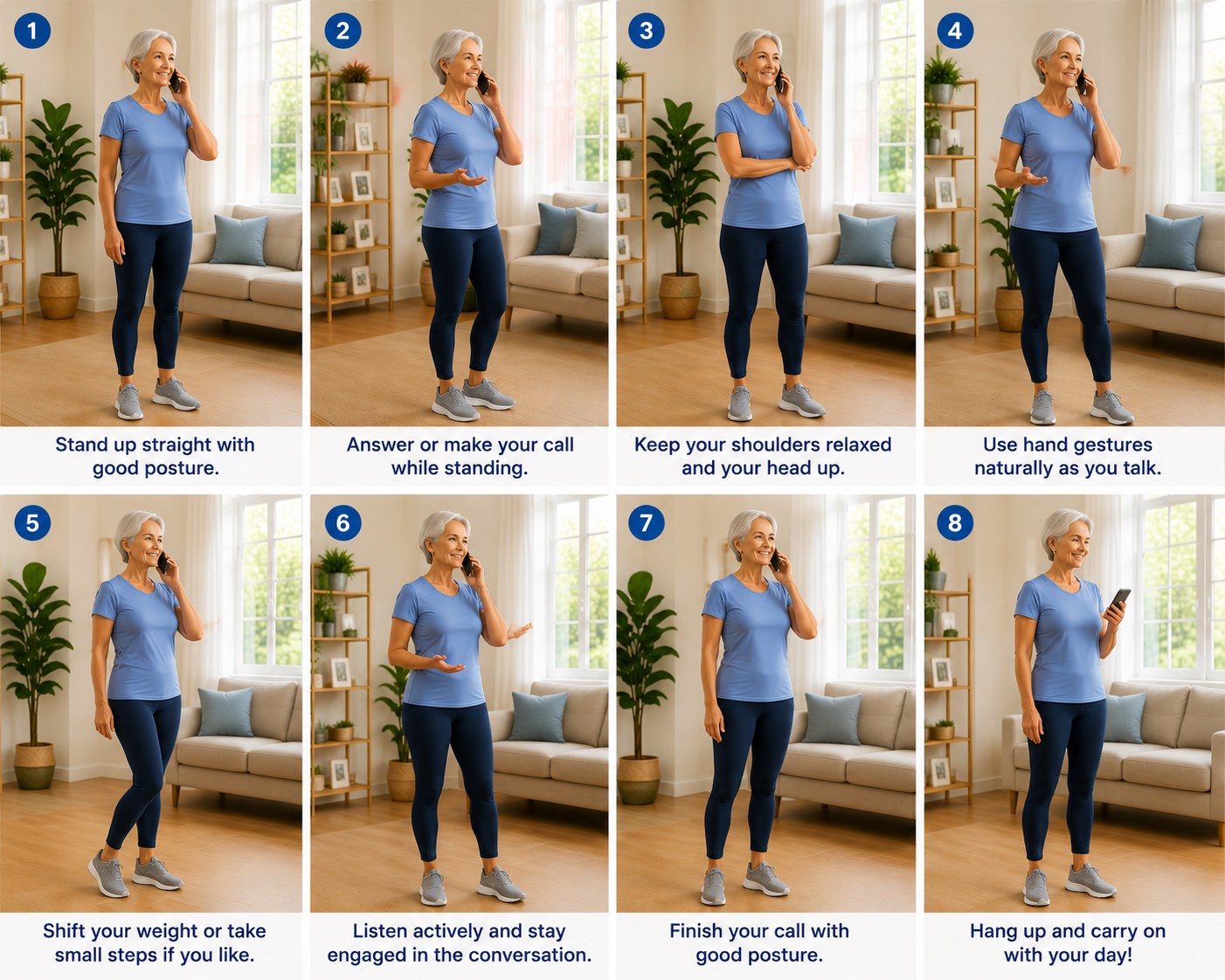
A phone call can provide an easy opportunity to change position.
If the conversation does not require you to use your computer, stand.
If appropriate, walk slowly around your room.
Standing is not a replacement for aerobic exercise.
It is simply one way to avoid remaining in the same seated position continuously.
WHO specifically recommends limiting sedentary behavior and replacing sedentary time with physical activity of any intensity when possible. WHO: Physical Activity and Sedentary Behaviour.
6. Try Short Movement Resets
You do not need to set a timer for exactly 25 minutes.
There is no universal evidence-based rule that every remote worker must move at precisely that interval.
Instead, use natural transitions.
Move:
- after a long meeting
- after finishing a report
- before lunch
- after a batch of emails
- between major work tasks
- before starting another project
A movement reset can take one to five minutes.
Walk around your home.
Stretch gently.
Change position.
The objective is to make prolonged uninterrupted sitting less automatic.
7. Put Frequently Used Items Slightly Farther Away
Your office should be convenient.
However, not every nonessential item needs to be within arm’s reach.
You might place a notebook, printer, or reference book slightly farther away.
Each trip is brief.
The purpose is not to force yourself to accumulate a specific number of steps.
It is to create natural opportunities to stand.
8. Schedule Movement Blocks on Your Calendar
Meetings receive calendar invitations.
Deadlines receive reminders.
Movement can receive them too.
For example:
10:30 a.m. — 3-minute walk
12:30 p.m.—Lunch away from desk
3:00 p.m. — 5-minute movement break
The exact schedule should fit your job.
If your calendar is extremely busy, start with one movement block.
The CDC notes that physical activity can be spread throughout the week and broken into smaller periods rather than completed all at once. CDC: Adding Physical Activity as an Adult.
9. Move Before Logging In
Many remote workers wake up and immediately open the laptop.
That can make the morning a direct transition from bed to chair.
Instead, consider moving before you log in.
You could:
- walk around your home
- perform gentle mobility
- walk outside
- perform a short exercise routine
It does not have to be a full workout.
Even a small amount of movement can make the transition into the day different.
WHO specifically states that people who are not currently meeting activity recommendations should start with small amounts and gradually increase frequency, intensity, and duration. WHO Physical Activity Guidelines.
10. Turn Household Tasks Into Movement Opportunities
Remote workers have a useful advantage.
Household tasks are nearby.
You can use them as opportunities to stand and move without pretending they are a replacement for structured exercise.
Examples include:
- watering plants
- folding laundry
- putting dishes away
- wiping a countertop
- organizing a shelf
- taking out household waste
WHO recognizes physical activity occurring through daily tasks, work, transportation, and leisure rather than only through formal workouts. WHO: Physical Activity Guidelines.
This is one reason the idea of an “active lifestyle” can be more practical than thinking only about gym sessions.
11. Try Walking Brainstorm Sessions
Some thinking tasks can be completed away from the desk.
If you are planning an article, thinking through a project or organizing ideas, consider walking while recording voice notes.
Only do this when the task allows it.
If walking makes you less focused, stay at your desk.
The purpose is to find situations where movement fits naturally rather than forcing movement into every task.
12. Use Waiting Time for Light Movement
Remote work contains small periods of waiting.
A file may be downloading.
Software may be updating.
Coffee may be brewing.
Food may be heating.
Instead of automatically checking your phone, use some of these moments to walk around.
A few minutes may not feel significant.
However, replacing some sitting with light movement is consistent with WHO’s recommendation to limit sedentary time and replace it with physical activity of any intensity. WHO: Sedentary Behaviour Recommendations.
13. Create an End-of-Workday Movement Ritual
Remote work can blur the boundary between professional and personal time.
A short walk after shutting down your computer can create a physical transition.
It does not need to be a demanding workout.
You could walk around your neighborhood, around your home, or to a nearby location.
The important part is creating a repeatable transition.
14. Eat Lunch Away From Your Desk
Lunch provides a natural opportunity to change your environment.
Instead of eating while continuing to work, leave your desk.
Walk to another room.
Prepare your food.
Eat without the computer when practical.
Afterward, consider taking a short walk.
This can break up a long period of sitting while also creating a clearer boundary around the lunch break.
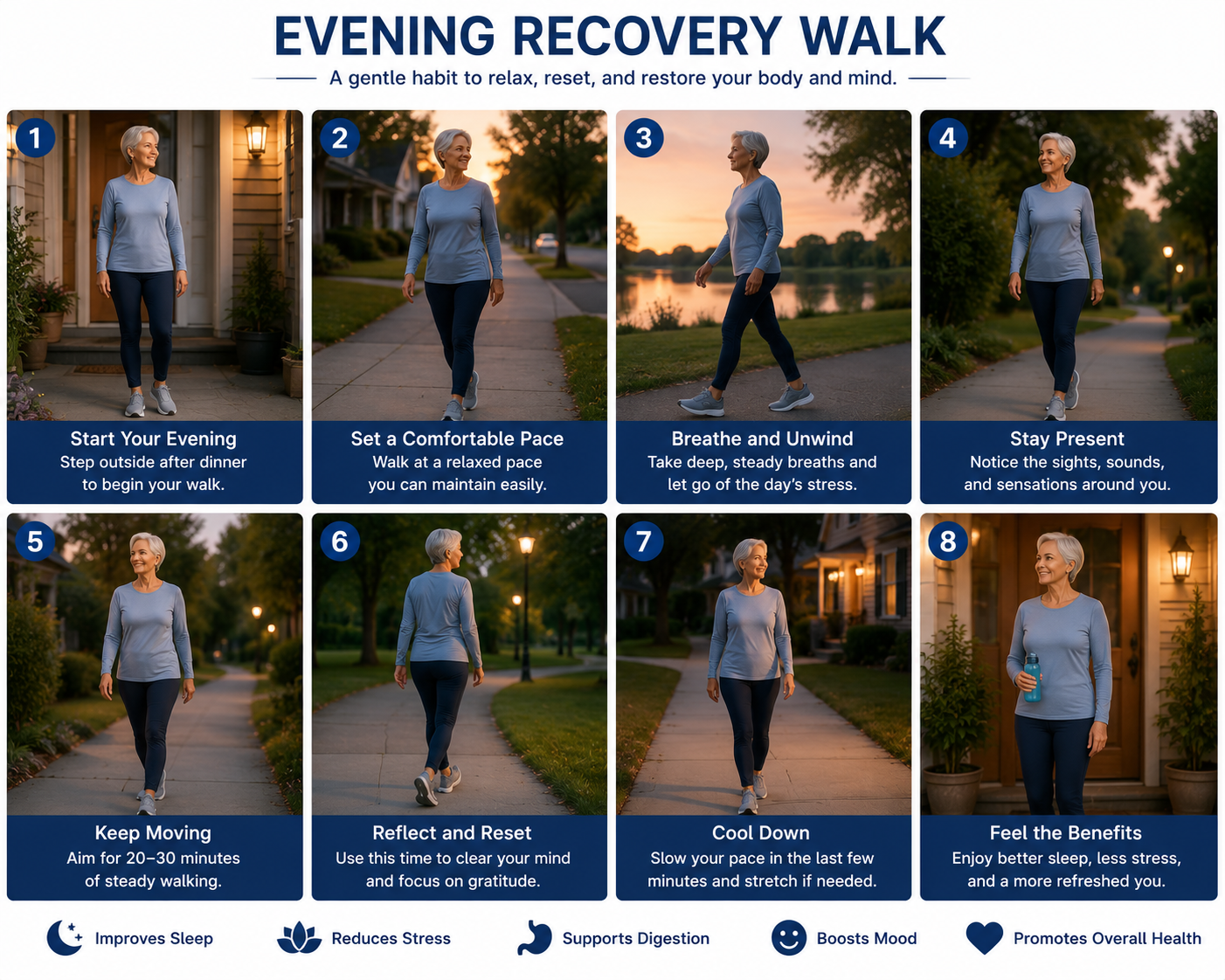
15. Take an Evening Recovery Walk
Related Topics
- 10 Best Core Exercises for Beginners at Home: Build a Stronger Core Without Equipment
- The Future of Fitness: How AI and Wearable Tech Are Changing Workouts
- 8 Effective Habits to Boost Mental Clarity and Focus
- 12 Best Ways to Work Life Balancing Health : The American Health Challenge
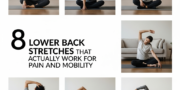
- 8 Lower Back Stretches That Actually Work for Pain and Mobility
- Category Active living